Curated by Design: The Hidden Science Behind Who Gets In and Who Gets Turned Away

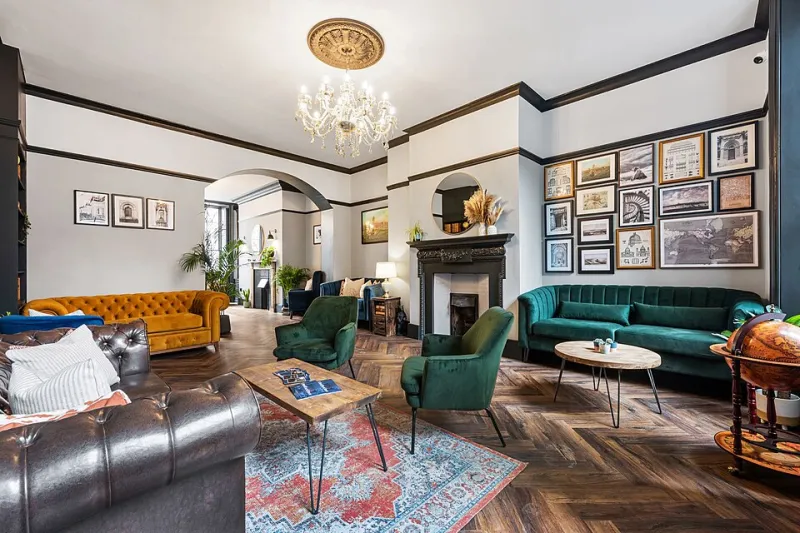
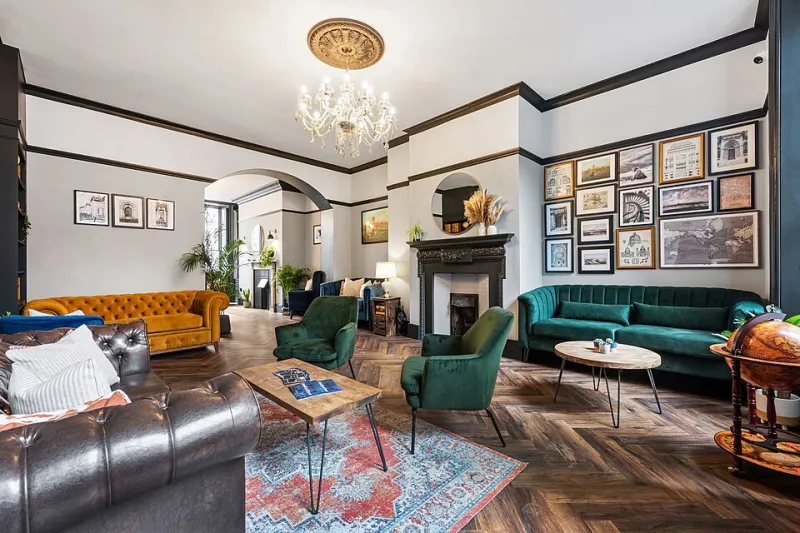
Photo: Tim Green from Bradford, CC BY 2.0, via Wikimedia Commons
The most coveted entertainment venues in America don't simply sell memberships — they architect social ecosystems with deliberate, almost surgical precision. Behind every velvet rope and digital access portal lies a vetting apparatus far more nuanced than any application form can reveal. Understanding how elite spaces curate their membership is, in itself, a lesson in the economics of desire.
The Application Is Not the Process
Ask any seasoned member of a truly exclusive club how they gained entry, and the answer rarely begins with a form. The formal application — the references, the financial disclosures, the letters of recommendation — is, for the most part, theater. It is the visible architecture of a process that began long before a prospective member ever submitted their first document.
At the highest tier of American private entertainment, vetting is relational. Membership directors at venues like Manhattan's Zero Bond or Los Angeles's San Vicente Bungalows have spoken publicly, if carefully, about the primacy of social mapping. Who vouches for an applicant carries considerably more weight than what the applicant declares about themselves. The sponsor's standing within the community is evaluated as rigorously as the candidate's résumé. A single endorsement from a deeply embedded member can open doors that a Fortune 500 title alone cannot.
This dynamic creates a self-reinforcing network effect. Members become invested in the quality of those they introduce because their own standing is implicitly linked to the people they bring forward. The community, in effect, polices itself — elegantly, invisibly, and without the need for overt enforcement.
The Metrics That Are Never Written Down
Every elite venue maintains a set of official criteria: income thresholds, professional standing, geographic residency requirements. These are the documented standards, the ones that satisfy legal scrutiny and lend the process an air of objectivity. But veteran observers of the private club circuit will readily acknowledge that the most consequential criteria exist nowhere in writing.
Cultural alignment is perhaps the most significant of these unwritten standards. Membership committees — whether convened formally or assembled informally over dinner — are evaluating a prospective member's conversational register, their awareness of the room, their capacity for discretion. Do they name-drop compulsively? Do they photograph everything? Do they speak about money in ways that suggest they have only recently acquired it?
The paradox here is profound. Many of the individuals most eager to join elite spaces are precisely those whose eagerness disqualifies them. Genuine cultural capital, the kind that elite venues are designed to concentrate and preserve, tends to manifest as a studied indifference to status signaling. The applicant who arrives already performing their membership has, in a very real sense, already failed the audition.
Rejection as Brand Architecture
There is a counterintuitive dimension to the gatekeeping process that is rarely discussed openly: strategic rejection is itself a brand-building tool. When a venue turns away a well-known figure — a celebrity, a prominent executive, a widely recognized name — word travels. The rejection is rarely publicized by the venue itself, but it circulates through the social networks that matter most to the institution's target membership.
These stories serve a critical function. They communicate, more powerfully than any marketing campaign, that the space operates according to principles that supersede conventional status hierarchies. The message is implicit but unmistakable: wealth and fame are necessary but not sufficient conditions. Something more is required, and that something remains deliberately undefined.
This strategic ambiguity is not accidental. The most sophisticated operators in the exclusive entertainment space understand that mystery is a form of value. A venue whose standards are fully legible is a venue whose standards can be gamed. The moment a prospective member can reverse-engineer the criteria for admission, the criteria have lost their power.
The Digital Frontier of Vetting
In the current landscape, the vetting apparatus has expanded to encompass digital behavior in ways that would have been unimaginable a decade ago. Social media profiles are reviewed not for follower counts — that metric is considered almost irrelevant at the highest tier — but for tone, discretion, and what one membership consultant described as "the quality of silence." What a person chooses not to post is often as revealing as what they do.
Platforms like TOKABU VIP represent a new evolution of this principle, applying the logic of physical exclusivity to digital entertainment environments. The screening mechanisms are adapted for the medium, but the underlying philosophy is identical: the value of the space is inseparable from the caliber of those who inhabit it. Access protocols, referral architectures, and behavioral standards within the platform all serve the same function as the membership committee in a Manhattan townhouse club.
The Burden of Belonging
What is often overlooked in discussions of exclusive membership is the obligation it confers on those who gain entry. Elite spaces do not simply grant access; they impose expectations. Members are expected to participate, to contribute to the social fabric of the community, and to exercise the same discretion in discussing the space as they would in discussing a private conversation.
Venues that have maintained their prestige over decades — the Metropolitan Club, the Knickerbocker, certain private gaming rooms in Las Vegas that operate well below public awareness — share a common characteristic: their members behave as custodians of the institution rather than consumers of a service. This stewardship mentality is, ultimately, what separates a genuinely elite space from one that has merely acquired the trappings of exclusivity.
The art of gatekeeping, then, is not simply the art of keeping people out. It is the art of cultivating a community that understands, without being told, why the gate exists in the first place.