Inside the New Gilded Rooms: How Private Gaming Clubs Are Rewriting the Rules of American Entertainment
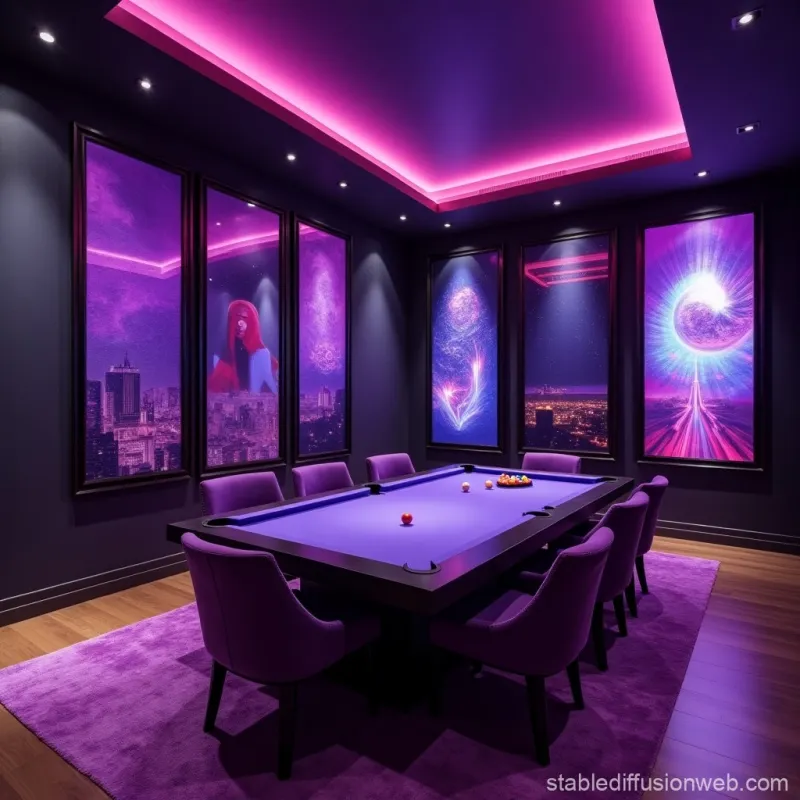
Photo: exclusive private lounge high-end gaming room affluent members dim lighting, via imgcdn.stablediffusionweb.com
A Different Kind of Game Room
The address, shared only after a brief vetting process, leads to an unmarked door on a side street in Chicago's West Loop neighborhood. Inside, past a reception area staffed by someone whose demeanor suggests a background in private banking rather than hospitality, a space unfolds that bears no resemblance to any casino most Americans have encountered. The lighting is low and deliberate. The furniture is serious. The guests — a rotating cast of finance professionals, tech founders, and a smattering of individuals whose occupations remain politely undisclosed — are engaged in games that range from high-stakes poker to curated digital experiences projected across a purpose-built display wall.
This is not Las Vegas. It is not Atlantic City. It is something newer, quieter, and considerably more complex — both legally and culturally.
Across major American cities, a category of private entertainment venue has emerged that occupies a fascinating and sometimes ambiguous space in the national leisure landscape. These clubs are not casinos in the traditional regulatory sense. Many operate through legal frameworks involving membership dues, social gaming structures, or sweepstakes mechanics that have been carefully reviewed by counsel. But their essence — the gathering of serious, affluent players in a controlled and curated environment — speaks to an appetite that the mainstream entertainment industry has been slow to satisfy.
Why the Casino Floor No Longer Cuts It
To understand the appeal of private gaming clubs, it helps to understand what they are a reaction against. The American casino, for all its grandeur in markets like Las Vegas and Macau's satellite properties, was designed for volume. The mathematics of the casino floor — its noise, its light manipulation, its deliberate sensory saturation — are optimized to keep the maximum number of people engaged for the maximum amount of time. It is, at its core, a mass-market proposition.
For a growing segment of high-net-worth Americans, that proposition has become actively unappealing. "The casino environment is engineered for the average visitor," observes a private club consultant who has worked with venues in New York, Miami, and Houston. "When you've reached a certain point in your life, you don't want to be in an environment engineered for the average visitor. You want to be somewhere that was built for someone like you."
That sentiment — recognizable to anyone who has spent time studying the luxury consumer mindset — is driving demand for something the traditional gaming industry has been structurally unable to provide: genuine exclusivity, combined with the social dynamics of a private club.
The Legal Landscape: Careful Navigation Required
It would be irresponsible to discuss private gaming venues without acknowledging the legal complexity that surrounds them. Gambling regulation in the United States is among the most fragmented in the developed world, with authority divided between federal statutes, state gaming commissions, and local ordinances that vary dramatically from one jurisdiction to the next.
The clubs and platforms operating in this space have, by necessity, become sophisticated students of that regulatory patchwork. Many private entertainment venues that offer gaming-adjacent experiences do so through structures that their legal teams have determined fall outside the statutory definition of gambling — operating instead as social clubs, skill-gaming venues, or sweepstakes-based platforms.
This is not a gray area that sophisticated operators enter carelessly. The clubs that have achieved longevity in cities like New York, Los Angeles, and Dallas have typically engaged gaming attorneys with deep regulatory experience, often veterans of state gaming commissions or federal enforcement agencies. Their counsel shapes everything from membership structures to the specific mechanics of how games are offered and won.
The digital counterparts to these physical venues — members-only gaming platforms operating under carefully constructed legal frameworks — face an analogous but distinct set of considerations, particularly as state-level legislation around online gaming continues to evolve rapidly.
Who Frequents These Spaces — And Why
The clientele of America's private gaming clubs defies easy categorization, though certain patterns emerge consistently. Technology entrepreneurs from San Francisco who have recently experienced liquidity events. Private equity professionals from New York seeking unstructured social time with peers. Real estate developers from Miami whose professional and social lives have become so thoroughly intertwined that genuinely private leisure time has become a rarity.
What unites them is less demographic than psychological. They are, almost universally, individuals who have become accustomed to curated environments in other areas of their lives — in their travel, their dining, their professional associations — and who find the absence of that curation in mainstream entertainment increasingly jarring.
"I've been to the Wynn. I've been to the Bellagio. I respect what those properties have built," says one member of a private gaming club in Manhattan, who requested anonymity as a condition of speaking. "But when I walk onto that floor, I'm one of forty thousand people who walked through that door this week. Here, the staff knows my name. The other members are people I actually want to spend time with. That's not a small thing."
The social dimension — the sense of genuine community among members — is cited with striking frequency as a primary draw. These venues are not merely places to play. They are, for their members, a form of social infrastructure.
Digital Disruption: The Private Club Goes Virtual
The most significant development in this space over the past several years has not occurred within any physical venue. It has occurred online.
The emergence of members-only digital gaming and entertainment platforms has created a new category of private club experience — one unbounded by geography, capable of serving members across time zones, and equipped with data infrastructure that physical venues cannot match. For the affluent American player who splits time between New York and Miami, or who travels internationally for months at a stretch, the digital private club offers something the physical venue structurally cannot: consistent, high-quality access regardless of location.
The most sophisticated of these platforms have moved well beyond the rudimentary design language of early online gaming. They have invested in interface design, community architecture, and personalization systems that create an experience of genuine distinction — one that communicates, at every touchpoint, that the member is participating in something that was built for them specifically.
This is the space where platforms like TOKABU VIP are operating — not as digital substitutes for physical exclusivity, but as a native expression of what elite entertainment looks like when built from the ground up for a discerning, digitally fluent audience.
The Future of the Private Game
The trajectory of private gaming and entertainment clubs in America suggests continued growth, driven by demographic and cultural forces that show little sign of reversing. As wealth concentration among the top tier of American earners continues, and as that cohort's expectations for curated, exclusive experiences extend further into their leisure lives, the demand for genuinely private entertainment will only deepen.
The clubs and platforms that will define this space in the years ahead are those that understand a fundamental truth: the game itself, however well-designed, is ultimately secondary. What members are paying for — what they are truly seeking — is an environment worthy of their time, populated by people worthy of their company, and managed by operators worthy of their trust.
In that sense, the private gaming club is less a disruption of the entertainment industry than a return to something older and more fundamental: the idea that the finest experiences are, by their nature, reserved for the few.