Beyond the Velvet Rope: The Psychology of True Exclusivity and Why Most Premium Tiers Fall Short
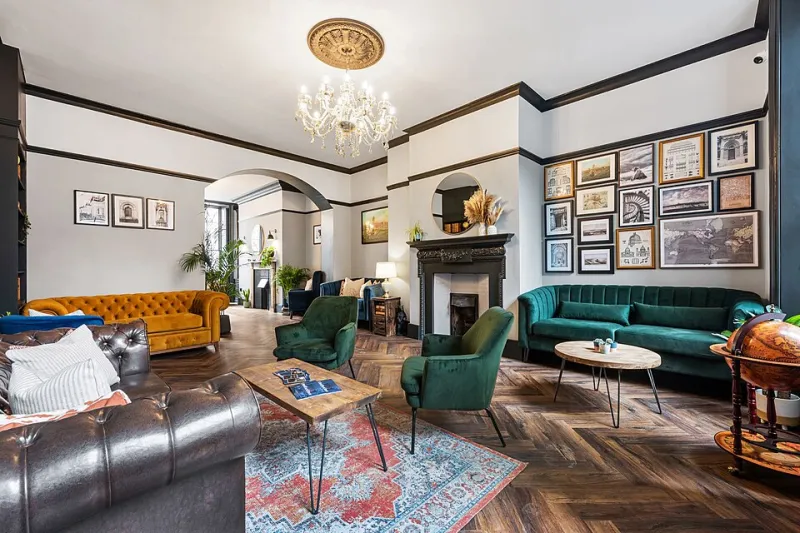
Photo: Hannahgoldsmithh2001, CC BY-SA 4.0, via Wikimedia Commons
The Illusion Most Brands Sell — And the Reality Elite Ones Deliver
There is a moment every seasoned traveler or high-net-worth individual knows well: the faint disappointment of realizing that the "VIP upgrade" they received is, in fact, the same experience everyone else gets — just with a different label on the door. A slightly wider seat. A complimentary glass of something forgettable. A laminated card that announces status without actually conferring it.
True exclusivity is an altogether different proposition. It is not manufactured through price inflation or cosmetic differentiation. It is engineered through a deep understanding of human psychology, deliberate scarcity, and an almost obsessive commitment to personalization. The brands and platforms that have mastered this — from the Aman resort group to private members' clubs like Zero Bond in New York City — share a common philosophy: the member must feel genuinely seen, not merely acknowledged.
Understanding why that distinction matters requires a brief detour into behavioral science.
Status, Scarcity, and the Brain's Reward Architecture
Psychologists have long documented the relationship between exclusivity and perceived value. Research published in the Journal of Consumer Psychology consistently demonstrates that individuals assign greater worth to goods and experiences when access to them is restricted. This is not mere vanity at work — it is a deeply wired cognitive mechanism rooted in social hierarchies that predate modern commerce by millennia.
But scarcity alone is a blunt instrument. Luxury hospitality consultants, particularly those working with ultra-high-net-worth clientele across markets like Manhattan, Beverly Hills, and Miami's Brickell corridor, are quick to note that artificial gatekeeping without substance erodes trust rapidly among sophisticated audiences.
"Affluent members have seen every trick in the book," notes one hospitality strategist with over two decades of experience designing concierge programs for five-star hotel brands. "They know when scarcity is real and when it's theater. What they respond to is when a brand demonstrates that it actually knows them — their preferences, their history, their unstated expectations."
This is where the most successful elite platforms diverge from their imitators. They invest not in broader access, but in deeper knowledge of the individual.
The Personalization Imperative
Consider what genuine personalization looks like in practice. At the Rosewood Mansion on Turtle Creek in Dallas, longtime guests have been known to arrive in their rooms to find their preferred brand of sparkling water already chilled, their favored newspaper waiting, and the thermostat pre-set to a temperature logged from a previous stay. No request was made. No form was filled out. The intelligence was quietly accumulated and seamlessly deployed.
Digital platforms operating at the premium tier face a parallel challenge — and the most sophisticated among them are meeting it with similar intentionality. Rather than offering a menu of generic perks, the leading members-only entertainment and gaming platforms are building preference engines that adapt to individual behavior over time, surfacing content, opportunities, and rewards that feel curated rather than algorithmic.
The distinction is subtle but profound. An algorithm that recommends based on category is a search engine. An experience engine that anticipates desire before it is consciously articulated is something closer to a trusted advisor.
Access as Currency: What Members Actually Value
When luxury research firm Wealth-X conducts sentiment surveys among ultra-high-net-worth Americans, one finding recurs with remarkable consistency: the most valued benefit of elite membership is not a tangible good. It is access — specifically, access to things that cannot simply be purchased.
This manifests in multiple forms. In the hospitality world, it might mean a reservation at a restaurant with a two-year waitlist, secured through a relationship that exists only because of membership. In the entertainment and gaming space, it translates to invitations to private tournaments, early access to exclusive experiences, or the ability to engage at stakes and in formats unavailable to the general public.
The platforms that understand this dynamic design their entire value proposition around access architecture. Every tier above the baseline should unlock something genuinely inaccessible below it — not a marginal improvement, but a categorically different experience.
The Intangible Dividend: Community and Identity
Perhaps the most underappreciated dimension of elite membership is its social function. Exclusive platforms and clubs do not merely provide services — they provide identity. Membership becomes a signal, both to others and to oneself, of belonging to a particular stratum of taste, achievement, and discernment.
This is why the composition of a membership matters as much as its benefits. The most prestigious private clubs in America — whether the Knickerbocker in New York or the Jonathan Club in Los Angeles — have historically been as selective about whom they admit as they are generous with what they offer. The implicit message is clear: the community itself is the premium.
Digital-first platforms face a more complex version of this challenge. Without physical space to confer social meaning, they must build community through curation, communication, and the careful management of who is invited to participate. When executed well, the result is a digital equivalent of the velvet rope — not a barrier to keep people out, but a signal to members that they are, unambiguously, on the inside.
What Separates Signal from Noise
For those evaluating what a truly elite membership should deliver — whether in hospitality, entertainment, or digital gaming — several criteria emerge from the evidence:
Genuine scarcity means the platform or venue cannot accommodate everyone who might want access. If the waitlist is decorative, the exclusivity is, too.
Behavioral personalization goes beyond demographic targeting. The platform knows you — your history, your preferences, your rhythm — and reflects that knowledge without being asked.
Access that cannot be purchased elsewhere is the irreducible core of VIP value. If every benefit can be replicated by spending more money on the open market, the membership premium evaporates.
Community coherence ensures that fellow members share a baseline of taste and seriousness that elevates the collective experience rather than diluting it.
Discretion and trust underpin everything. Elite members are not interested in broadcasting their participation — they expect their membership to be handled with the same confidentiality they would apply to any significant personal matter.
The Standard Worth Holding
At TOKABU VIP, these principles are not aspirational talking points. They are the operational foundation upon which every member experience is constructed. The distinction between a premium tier and a genuinely elite one is not a matter of marketing language — it is a matter of daily execution, sustained investment in member intelligence, and an unwavering commitment to the idea that access, properly designed, is among the most meaningful things a platform can offer.
The velvet rope, after all, is only as meaningful as what lies beyond it.