Designed to Die: The Ultra-Wealthy Collectors Paying Fortunes for Technology Built to Expire
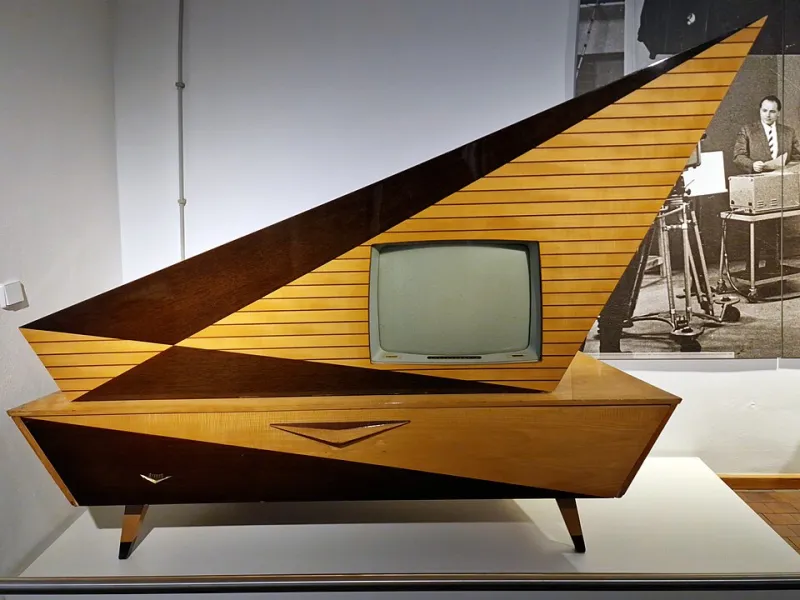
Photo: anagoria, CC BY 3.0, via Wikimedia Commons
There is a particular kind of satisfaction that comes from owning something the rest of the world will never touch. For generations, that satisfaction was delivered through art, real estate, or rare automobiles. But a quiet revolution is unfolding in the upper tiers of American wealth culture — one in which the most coveted possessions are not built to last, but engineered, quite deliberately, to disappear.
Welcome to the world of the obsolescence premium.
The Paradox at the Center of Extreme Wealth
Conventional wisdom holds that the ultra-wealthy purchase things that endure. A Patek Philippe watch is passed between generations. A Basquiat canvas appreciates over decades. A Hamptons estate accumulates value with each passing market cycle. The logic of durable luxury is so deeply embedded in American wealth culture that its opposite seems almost perverse.
And yet, among a growing cohort of high-net-worth individuals — many of them tech-adjacent, many of them younger inheritors of new-economy fortunes — the most compelling status signal is not permanence. It is impermanence, executed at enormous expense.
The appeal is not difficult to understand once you strip away conventional assumptions. In a world where virtually any luxury good can be approximated by someone with sufficient resources, true exclusivity requires a different kind of scarcity. A device that will never be repaired, a platform that will be deliberately decommissioned, a piece of hardware that exists in a single edition and was never designed to survive — these objects carry a weight that no mass-produced luxury item can replicate.
First-Generation Artifacts and the Collector's Market
The most accessible entry point into this world involves the acquisition of rare first-generation consumer technology — not as nostalgic collectibles, but as deliberate investments in objects whose uselessness is already guaranteed.
Consider the market for original prototype hardware from the early days of Silicon Valley. Devices that never reached production, engineering samples that circulated only within closed development teams, and pre-release units that were meant to be destroyed have begun commanding prices that rival mid-tier fine art. The appeal is straightforward: these objects represent a moment in technological history that cannot be recreated, and their complete functional obsolescence is precisely the point.
One prominent collector — a former venture capital partner based in the Bay Area — has assembled what he describes as a "museum of dead futures": a climate-controlled room containing over two hundred devices, none of which are capable of connecting to any existing network, running any current software, or performing any function they were originally designed for. The collection, valued conservatively at several million dollars, is never displayed publicly. It exists entirely for its owner.
"The value isn't in what they do," he has said in private conversations documented by associates. "The value is in what they were supposed to do, and didn't."
Commissioned Obsolescence: The Custom Device Market
Beyond collecting, a more rarefied practice has emerged: commissioning technology specifically engineered to fail.
A small number of boutique design firms — most operating without public-facing websites or conventional client intake processes — now offer custom hardware development services to ultra-high-net-worth clients. The specifications are unusual. Clients request devices built around proprietary components that will never be manufactured again, operating systems written for a single machine, and encryption architectures with no recovery pathway. Some commission communication devices designed to function for a single exchange before rendering themselves permanently inoperable.
The prices for such commissions are not publicly disclosed, but industry observers with knowledge of the space suggest that individual projects routinely exceed seven figures. The clients are not purchasing functionality. They are purchasing the experience of using something that exists only once, in a form that will never be replicated or restored.
The psychological architecture of this behavior is worth examining. Psychiatrists who work with ultra-high-net-worth individuals describe a phenomenon sometimes called "terminal uniqueness" — the desire not merely to own something rare, but to own something whose rarity is guaranteed by its own destruction. The object's death is the point. Its uselessness is the feature.
The Auction Circuit: Bidding on Hardware That Will Never Function Again
Perhaps the most theatrical expression of the obsolescence premium plays out in the private auction circuit — a world that operates almost entirely outside public view and bears little resemblance to the branded luxury auctions that receive mainstream coverage.
In these rooms, bidders compete not for the most powerful or functional technology, but for the most definitively finite. Limited-edition hardware releases from defunct manufacturers, prototype units from companies that never survived to production, and — in the most extreme cases — devices that were intentionally designed as one-of-one objects with no maintenance infrastructure and no manufacturer support command the highest premiums.
One recurring category involves early-era consumer electronics from companies that dissolved before establishing any service or repair network. These devices, which may have functioned for only weeks or months before becoming inoperable, are documented, authenticated, and offered with certificates confirming that no replacement parts exist anywhere in the world. The certificate of permanent dysfunction is, in many cases, the primary selling point.
Bidding on such items has reportedly reached into the hundreds of thousands of dollars for single units — figures that would seem irrational by any conventional valuation framework, but make complete sense within the logic of terminal scarcity.
What the Obsolescence Premium Reveals About Elite Status
It would be easy to dismiss this phenomenon as eccentricity — the financial equivalent of a billionaire's whim. But that reading misses something important about the current state of American elite culture.
For the first time in modern history, the upper tier of American wealth is populated by individuals who made their fortunes in an industry defined by planned obsolescence. The technology sector has spent fifty years conditioning its participants to understand that today's breakthrough is tomorrow's landfill. The iPhone you hold is already being replaced by the version you haven't seen yet. The platform you use is already being superseded by one you don't know exists.
For those who built fortunes within that system, obsolescence is not a defect. It is the fundamental proof of progress. To own something that has already become obsolete — especially something that was always going to become obsolete — is to hold a piece of the cycle itself.
There is also a more direct status logic at work. In a culture where the wealthiest individuals have already acquired every form of conventional luxury, the only remaining frontier is the acquisition of experiences and objects that are categorically unavailable to everyone else. A device that will never work again, built for a single owner and guaranteed to remain in that state permanently, satisfies that requirement absolutely.
The Deeper Currency
The obsolescence premium, at its core, is not about technology at all. It is about time — specifically, the ability to hold a moment so tightly that it cannot escape into the future.
Every functional luxury object carries with it the possibility of continuation. A watch can be serviced. A painting can be restored. An estate can be renovated. But a device that has been engineered to die, that carries no path forward and no possibility of repair, exists in a kind of permanent present. It is frozen at the moment of its own ending.
For those who have already purchased every version of the future, there may be something genuinely compelling about owning the past — not as nostalgia, but as a deliberate act of closure.
At TOKABU VIP, we have observed few phenomena in contemporary elite culture that reveal as much about the psychology of extreme wealth as the willingness to pay millions for something that no longer works. It is, in its way, the purest expression of what luxury has always been: the acquisition not of utility, but of meaning.