The Luxury of Nothing: How America's Elite Are Paying Fortunes to Simply Exist Without Stimulation
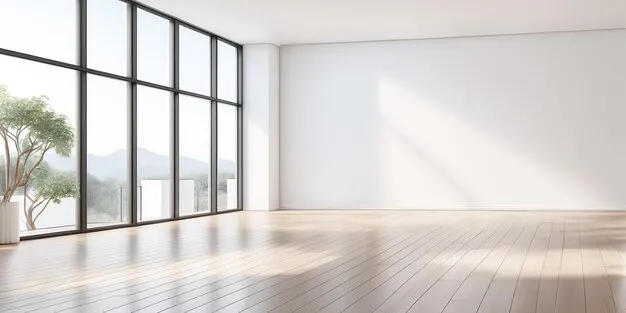
Photo: minimalist luxury empty room natural light stillness serene interior, via img.freepik.com
There is a particular kind of exhaustion that no spa weekend resolves. It arrives not from overwork in the conventional sense, but from the unrelenting demand to consume, respond, perform, and optimize — a fatigue native to those whose professional and social lives exist at the absolute apex of modern engagement culture. For a growing number of America's most influential individuals, the antidote is not another curated experience. It is, deliberately and expensively, the absence of one.
Welcome to what some within closed membership circles have begun calling the stillness economy — a nascent but rapidly expanding sector of ultra-premium leisure built entirely around the radical proposition that the most valuable thing money can now purchase is time that demands absolutely nothing of you.
The Problem with Premium Stimulation
For decades, the architecture of elite membership has been constructed on a single premise: that access to more — more spectacle, more exclusivity, more curated sensation — is the defining currency of high-net-worth leisure. Private aviation delivered you to bespoke destinations. Concierge services engineered flawless itineraries. Even the quietest luxury resorts filled their programming calendars with carefully orchestrated activities designed to ensure that no moment went unoptimized.
The result, for a certain tier of member, has become its own kind of trap.
"There is a ceiling to how much stimulation a person can meaningfully absorb before the stimulation itself becomes the noise," observes one behavioral economist who consults for several invitation-only membership organizations, speaking on condition of anonymity. "What we are seeing now is a cohort of individuals for whom premium content has become indistinguishable from ambient distraction. They are not looking for better programming. They are looking for the absence of programming entirely."
This is not, it should be noted, the wellness movement repackaged. Meditation retreats, digital detox weekends, and mindfulness-adjacent travel have occupied the luxury market for years, and they share a critical flaw: they replace one form of curated engagement with another. A guided breathwork session led by a celebrated instructor in a architecturally significant space is still, at its core, a performance. Someone designed it. Someone is watching to ensure you are doing it correctly.
What the stillness economy offers is categorically different. It offers genuine boredom.
What Genuine Boredom Actually Costs
Several private organizations operating primarily across the Northeast, Pacific Northwest, and select rural corridors of the American West have, over the past three years, built membership models around what they term unstructured peer time. The language is deliberately clinical. The experience, by all accounts, is something closer to revelatory.
One such organization — which declines all press inquiries and whose membership roster has never been publicly confirmed — operates a series of properties where the explicit design principle is the elimination of agenda. There are no scheduled meals at fixed hours. There is no concierge desk. There is no entertainment infrastructure of any kind. Members arrive, occupy beautifully appointed but deliberately understimulating spaces, and exist alongside fellow members who have agreed, by the terms of their membership contract, not to conduct business, not to document their presence on any platform, and not to initiate structured social programming of any kind.
The annual membership fee for this organization, according to individuals with direct knowledge of its structure, begins north of $85,000.
The waiting list currently extends approximately two years.
The demand, by any rational market logic, should not exist at this scale. And yet it does — and it is growing.
The Peer Dimension
What distinguishes these spaces from simple solitude is a factor that members consistently cite as central to the experience: the quality of the company kept in silence.
There is a meaningful difference between being alone with one's thoughts and being undemanded-upon in the presence of peers who have earned, through their own considerable achievement, the right to the same stillness. The social architecture of these memberships is constructed with the same rigor applied to any elite club — applicants are vetted not merely for financial qualification but for what one membership director described as the capacity to not perform.
"The hardest part of our selection process," this individual explained, "is identifying people who will not attempt to make the experience into something. The instinct to network, to impress, to demonstrate value — it is deeply conditioned in the people who can afford to be here. We are looking for the rare individual who has moved past it."
This quality — the willingness to simply be, without leveraging the moment — has become its own form of social capital within these circles. To be known as someone who can occupy an unstructured afternoon without reaching for their phone, without engineering a connection, without converting the time into content or currency, is to signal a level of personal security that no amount of conventional status display can replicate.
The Platform Equivalent
The stillness economy is not confined to physical spaces. A smaller but equally compelling development is occurring within the digital membership landscape, where certain invitation-only platforms have begun experimenting with what might be described as low-stimulation environments — member spaces deliberately engineered to resist the engagement mechanics that define conventional digital interaction.
No notification architecture. No algorithmic content surfacing. No performance metrics, follower counts, or engagement indicators of any kind. Some have gone further, removing the ability to post content altogether, leaving members with nothing but access to a sparse, text-based forum where conversation moves at the pace of genuine thought rather than reactive impulse.
The counterintuitive result, according to individuals familiar with these platforms, is that the quality of exchange within them bears no resemblance to anything occurring on conventional social networks. When the incentive to perform is structurally removed, what remains is something closer to actual communication.
What This Signals
The emergence of the stillness economy is, at its core, a market signal of considerable weight. When individuals with the resources to access any experience on earth begin paying premium prices for the experience of nothing in particular, it suggests that the attention economy has reached a point of genuine saturation at the highest levels of the consumer spectrum.
The scarcest resource in contemporary American life is not access to luxury. It is not exclusivity in the traditional sense. It is the cognitive and emotional space to simply be present without the mediation of curated content, social performance, or algorithmic suggestion.
For those operating at the very top of the wealth distribution, that space has become worth purchasing at remarkable cost — and the platforms and organizations sophisticated enough to sell it authentically are discovering that demand significantly outpaces their capacity to supply it.
Boredom, it turns out, is the ultimate luxury. And like all genuine luxuries, very few people can actually afford it.