The Art of the Unopened Door: Why America's Most Exclusive Platforms Are Selling the Wait

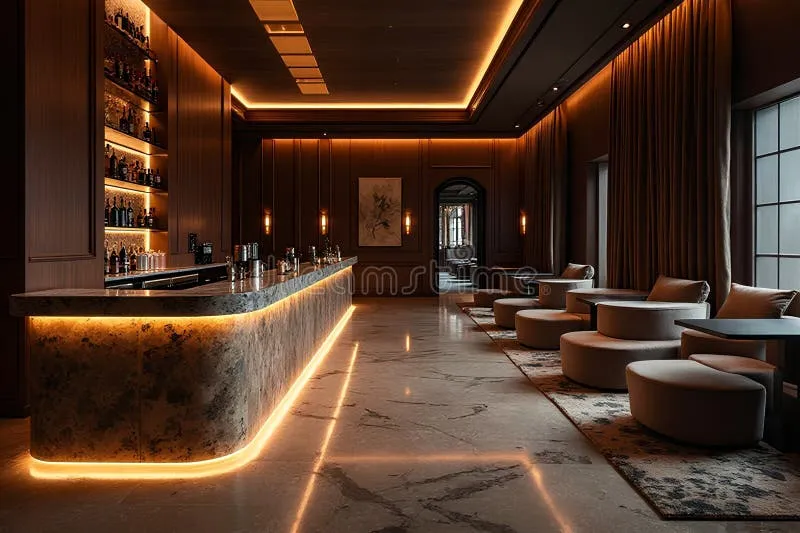
Photo: exclusive private club entrance velvet rope luxury waiting list, via thumbs.dreamstime.com
At some point in the recent history of American luxury culture, someone realized that the most powerful thing a premium brand could do was make its best customers wait. Not as a byproduct of limited capacity — as a deliberate act of value creation. That realization has since been refined, systematized, and deployed with considerable sophistication across the landscape of elite membership clubs, private gaming platforms, and invitation-only social networks. The result is a peculiar economy in which access is theoretically for sale, but the experience of being denied it — temporarily, strategically, publicly — has become the product that actually moves.
Engineering Scarcity in a World of Abundance
The mechanics of a premium waiting list are, on their surface, simple. Applications are accepted. Approval is withheld. A queue forms. What distinguishes the most sophisticated operators from those merely managing demand is the degree of intentionality applied to every element of that process.
The length of the wait is calibrated, not incidental. Some platforms openly acknowledge that their approval timelines are adjusted dynamically — extended during periods of high application volume not because processing capacity is genuinely strained, but because a shorter wait would reduce the perceived value of membership. The signal a six-month approval process sends is fundamentally different from the signal a six-week process sends, even if the membership itself is identical.
The opacity of the criteria is equally deliberate. When applicants cannot determine precisely what qualifications would guarantee their acceptance, they tend to invest more heavily in the attempt — soliciting referrals, refining applications, and in some cases spending considerable sums on adjacent services that signal alignment with the platform's values. The ambiguity is not a flaw in the system. It is a feature that generates both revenue and narrative.
FOMO as a Financial Instrument
Fear of missing out is a well-documented psychological mechanism, but its application in the premium membership context operates at a level of sophistication that the term's casual usage rarely captures. For America's wealthiest consumers, the fear is not of missing a party or an experience — it is of being visibly outside a network that their peers are visibly inside.
This is a meaningfully different anxiety. The ultra-high-net-worth individual who has been waitlisted by a prestigious gaming platform or private club is not suffering from the ordinary sting of exclusion. They are experiencing a specific social vulnerability: the possibility that their position in an informal hierarchy — one that matters enormously to them even if it is never openly discussed — is less secure than they had assumed.
Platforms that understand this dynamic can leverage it with precision. Periodic communications to waitlisted applicants — updates that convey progress without confirming timelines, that acknowledge the applicant's credentials without committing to approval — maintain the anxiety at a productive level. The applicant remains engaged, invested, and in many cases willing to spend in adjacent contexts to demonstrate their suitability.
The spending patterns this generates are not trivial. Research into luxury consumer behavior consistently finds that the anticipation phase of a major purchase or membership decision is associated with elevated discretionary spending across related categories. The person waiting to be accepted into an elite gaming platform may, in the interim, upgrade their technology, invest in peripheral memberships, or increase their activity on platforms where they are already members. The wait, in this sense, is commercially generative far beyond the membership fee it eventually produces.
The Status of the Waitlist Itself
Perhaps the most counterintuitive development in this space is the degree to which membership on a prestigious waiting list has become a status signal in its own right. In certain American social circles, being able to mention — with appropriate casualness — that one is in the process of being considered by a particular platform carries genuine social weight. It signals that one was deemed worthy of consideration, that one moves in circles where such memberships are sought, and that one has the patience and confidence to wait.
This dynamic has not gone unnoticed by the platforms themselves. Some have begun treating the application process as a semi-public performance, providing applicants with materials — digital or physical — that are visually distinctive enough to function as conversation pieces. The application itself becomes an artifact of aspiration, something to be displayed rather than merely submitted.
The logical endpoint of this trajectory is a system in which the waiting list and the membership are effectively two different products, each with its own value proposition. Membership delivers access. The waiting list delivers identity. For a meaningful segment of the target market, the latter may be the more compelling offer.
A Candid Assessment
It would be intellectually dishonest to analyze this system without acknowledging its more manipulative dimensions. The deliberate engineering of desire through artificial scarcity is, at its core, a form of psychological leverage applied to people who believe they are operating from a position of strength. The wealthy applicant who spends months in pursuit of a membership they could theoretically afford on the day of application is not, in any meaningful sense, exercising power. They are responding to a system designed to extract maximum value from their desire.
That said, the system persists because it delivers something real. The member who finally gains access to a platform with a genuine waiting list enters a community that has been self-selected for a particular kind of ambition and patience. The shared experience of the process creates a form of social cohesion that instant-access platforms struggle to replicate. There is, in other words, a legitimate product buried beneath the psychological engineering.
The most honest question for any prospective member of an elite platform is not whether the waiting list is real or manufactured. It is whether the membership, once obtained, justifies the architecture of desire that was built around it. In the best cases, the answer is unambiguous. In others, the door, once opened, reveals a room that was always less remarkable than the anticipation suggested.
For platforms operating at the genuine premium tier — where the content, community, and experience are substantive enough to warrant the process — the waiting list remains one of the most elegant value-signaling mechanisms available. For those trading on scarcity alone, the strategy is borrowed time. Eventually, the members who waited long enough will form their own assessment of what they were waiting for.